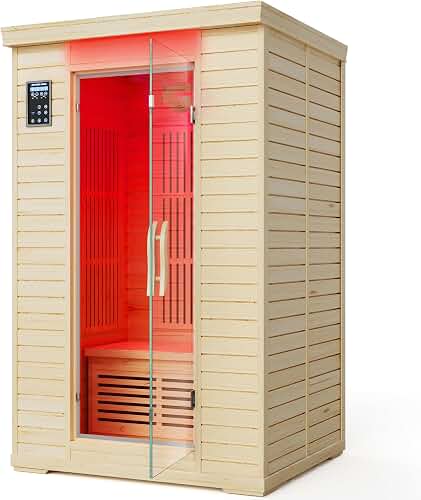
The best infrared sauna for apartments with 110v outlet is a 1- to 2-person cedar or hemlock cabin (or a sauna blanket/tent) rated at 1,500-1,800 watts that draws under 15 amps and plugs directly into a standard household receptacle—no electrician, no panel upgrade, no 220v line required. For renters and condo owners in 2026, that means brands like Maxxus, Dynamic, JNH Lifestyles, and LifeSmart corner units, plus apartment-friendly portables from SereneLife and HigherDOSE, all of which run reliably on the same circuit you would use for a hair dryer—provided you do not share it with another high-draw appliance.
Why 110v Matters So Much in an Apartment
Most premium home saunas—the kind that seat three or more, push 140°F+, or run 3,000+ watts of full-spectrum heaters—need a dedicated 240v/30-amp circuit, the same kind of line that powers an electric dryer or stove. In a rented apartment, you almost certainly cannot install one. Landlords rarely permit electrical work, condo boards balk at panel changes, and even when allowed, you are looking at $500-$2,000 for a licensed electrician to run conduit through walls you do not own.
A 110v (also written 120v) sauna sidesteps the entire problem. It plugs into the same outlet as your toaster, draws 12-15 amps at peak, and pulls 1,500-1,800 watts total—well within the 1,800-watt safe ceiling for a standard 15-amp circuit. That is why the best infrared sauna for apartments with 110v outlet shopping list looks so different from a typical “best home sauna” roundup: you are filtering for size, wattage, and circuit compatibility first, and luxurious features second.
What to Look For in a 110v Apartment Sauna
Power Draw Under 1,800 Watts
The math is simple: 110 volts × 15 amps = 1,650 watts of continuous safe draw (the NEC limits continuous loads to 80% of breaker capacity). Saunas marketed at 1500W or 1600W sit comfortably under that. Anything labeled 1800W is the absolute ceiling and may trip a breaker on older wiring. Avoid 2,000W+ units unless your apartment happens to have a 20-amp outlet (you will see a horizontal T-slot on the receptacle).
1-2 Person Footprint
Three- and four-person cabins almost always require 220v because their cumulative heater wattage exceeds 1,800W. Stick to single-person closets (roughly 36 by 36 inches) or 2-person corner cabins (around 47 by 47 inches). Corner units are particularly apartment-friendly because they tuck into wasted wall geometry that a rectangular cabin cannot fill.
Low-EMF Heaters
In a small apartment, you sit closer to the heaters than you would in a basement install. Look for explicit EMF testing below 3 mG at the bench, ideally certified by a third party. See our guide to the best low-EMF infrared saunas for verified picks across price tiers.
Pre-Built Plug-and-Play Assembly
Apartment ceilings are typically 8 feet. Most plug-and-play cabins fit under that with 6 inches to spare, but always confirm the manufacturer’s stated height. Buckle-clip cabin construction (versus hardwired panels) means you can disassemble for moving—critical if you sign year-to-year leases.
Quiet Operation
Carbon heaters with low-RPM circulation fans (under 35 dB) are essential when your bedroom shares a wall with a neighbor. Older ceramic systems with loud blowers should be avoided in shared-wall settings.
The Three Apartment-Friendly Sauna Categories
1-Person Plug-In Cedar or Hemlock Cabins
This is the gold standard if you have roughly 12 square feet of floor space and a clear wall. Cabins from Maxxus, Dynamic, JNH Lifestyles, and LifeSmart in the 1-person class typically run six carbon heaters totaling 1,500-1,750 watts. They plug into any standard outlet, assemble in 60-90 minutes with nothing beyond the included Allen key, and reach 140°F in 25-30 minutes. The trade-off is permanence: while you can disassemble them, hauling cedar panels up three flights of stairs is a workout.
2-Person Corner Cabins (Still 110v)
A handful of 2-person corner saunas squeak in under the 1,800W ceiling—typically using seven or eight lower-wattage carbon panels rather than higher-output ceramic emitters. The Maxxus Seattle, JNH Lifestyles Joyous, and Dynamic Barcelona models are perennial 110v favorites here. They give you room to recline or sauna with a partner without forcing a 220v upgrade. Browse our top 2-person sauna picks for a side-by-side comparison of footprints and wattage.
Portable Saunas (Tents, Blankets, Pods)
If you rent a small studio, a true cabin may simply not fit. Portable infrared tents (SereneLife, Durasage, SurmountWay) and sauna blankets (HigherDOSE, LifePro, Therasage) run on 110v with 600-1,000-watt draws—well below even a 15-amp limit. They fold flat and store under a bed, making them ideal for tight footprints and frequent movers. The trade-off is lower max temp (around 150°F inside the tent versus 140°F ambient in a cabin) and shorter lifespan. Read our roundup of the best portable infrared saunas to see which models hold up beyond the first year.
Power and Electrical Safety: The Three Rules
Rule 1: One Circuit, One Sauna
Even a 1,500W sauna leaves only about 150W of headroom on a 15-amp circuit. That means nothing else of significance—no space heater, no microwave, no hair dryer—can share the outlet while the sauna runs. Map your apartment’s breakers before buying. Bedroom outlets are usually safer choices than kitchen or bathroom GFCI circuits because they tend to be on dedicated, less-loaded runs.
Rule 2: Avoid Extension Cords
Saunas pull continuous high amperage for 40+ minutes per session. Cheap 16-gauge extension cords overheat under that load and are a real fire risk. Plug directly into the wall. If you absolutely must extend, use a 12-gauge appliance-rated cord no longer than 6 feet, and feel the cord halfway through your first session—any noticeable warmth means stop.
Rule 3: Test the GFCI
Many apartment outlets (especially near plumbing) are GFCI-protected. Some sauna heaters trip GFCIs erroneously due to leakage current. Test before unboxing—plug a space heater or hair dryer into the intended outlet at full draw for 10 minutes. If it holds, your sauna likely will too. If it trips, switch to a different circuit before assembly.
Lease, Insurance, and Neighbor Considerations
Before you click buy, check your lease for clauses about “alterations” or “appliances exceeding X watts.” A free-standing plug-in cabin is almost always permitted (it is furniture, legally speaking), but some condo boards specifically prohibit saunas as fire risks. Renters insurance typically covers sauna-caused damage, though some carriers exclude “supplemental heating devices”—a 30-second call to your agent clarifies it.
Noise to neighbors is mostly a non-issue—a modern carbon sauna at idle hums quieter than a refrigerator—but heat radiating through a shared wall can warm an adjacent unit by a few degrees. Position the sauna against an exterior wall when possible, and avoid placing it directly against a thin drywall partition shared with a sleeping area next door.
Installation in Tight Apartments
Apartment installation is mostly about logistics, not construction. Measure your elevator (or stairwell turn radius) before ordering—a 47-inch boxed cabin will not fit a standard 36-inch elevator door diagonal. Most 110v saunas ship in 2-4 flat-pack boxes, which solves this, but always confirm individual box dimensions on the manufacturer’s spec sheet.
You will need a level floor (or shims), 4 inches of breathing room behind the unit, and zero combustible materials touching the cabinet exterior. Hardwood and tile are ideal floor surfaces; thick carpet can work if you slide a quarter-inch plywood platform underneath. See our step-by-step home install guide for floor protection, leveling, and ventilation specifics.
Budget Expectations in 2026
For 110v apartment-class units in 2026, the best infrared sauna for apartments with 110v outlet sits in well-defined price brackets:
- $1,200-$1,800: Solid 1-person hemlock cabins from Maxxus, Dynamic, JNH Lifestyles
- $1,800-$2,500: Premium 2-person corner units, cedar construction, Bluetooth audio
- $200-$600: Portable tents (SereneLife, Durasage)
- $500-$700: Premium sauna blankets (HigherDOSE V4, LifePro)
Pricing has stayed flat year-over-year because the supply chain for cedar and carbon heaters stabilized in late 2024. There is rarely a reason to overspend in this category—the 1,500W ceiling caps performance regardless of brand, so paying for premium wood and lower EMF certification makes more sense than chasing wattage.
Frequently Asked Questions
Can I really run an infrared sauna on a regular apartment outlet?
Yes—provided the sauna is rated at 1,800 watts or lower and you do not share the circuit with other high-draw appliances. Any 1-person cabin and many 2-person corner cabins fall in this range, as do all sauna blankets and tents. The outlet itself is identical to one you would plug a vacuum or hair dryer into; no special wiring is required.
Will a 110v sauna get hot enough for a real sweat?
Absolutely. Most 1,500W cabins reach 130-140°F at the bench within 30 minutes, which is the optimal infrared operating range. Infrared works by heating your body directly via radiation, not by superheating the air like a traditional Finnish sauna, so the lower ambient temperature still produces a full sweat in 20-25 minutes.
How many amps does a 110v infrared sauna actually pull?
A typical 1,500W sauna pulls about 13.6 amps at full heater output (1500 ÷ 110 = 13.6). A 1,750W unit draws around 15.9 amps, which is right at the safe limit of a 15-amp breaker and may trip on warm days or older wiring. Aim for 1,600W or less if your breaker box is unmarked or aged.
What is the smallest infrared sauna for a studio apartment?
The smallest practical cabin is roughly 32 by 32 inches at the base and 70 inches tall—about the footprint of a phone booth. If even that is too much, switch to a sauna blanket (folds to the size of a yoga mat) or a fold-up infrared tent (collapses to a 24-inch cylinder). Both run on standard outlets and store under a bed.
Do I need ventilation for an indoor infrared sauna in an apartment?
Cabin saunas have built-in roof vents that handle moisture; you do not need an external exhaust fan. After each session, leave the cabin door open for 30-45 minutes to dry the wood interior. In poorly ventilated apartments, crack a nearby window during this drying phase to prevent humidity from settling into drywall.
Can my landlord ban a plug-in infrared sauna?
A free-standing plug-in sauna is legally a personal appliance, similar to a stand mixer or treadmill. Most leases cannot prohibit it outright, but landlords may cite weight restrictions (a 2-person cabin can weigh 350 pounds) or insurance riders. Read your lease’s appliance clause carefully, and notify your landlord in writing before installing a permanent cabin.
What is the difference between a 110v sauna and a 220v sauna?
A 220v line lets manufacturers stack more heaters (3,000W+) for faster heat-up, higher peak temperatures, and larger cabin sizes (3-4 person units). For a single user in a 1-2 person cabin, 110v models reach the same 140°F operating temperature—they just take 5-10 minutes longer to preheat. The performance gap is much smaller than the price gap suggests, which is why 110v dominates the apartment market.
Key Takeaways
- Choosing the right best infrared sauna for apartments with 110v outlet means matching the key features to your specific needs and budget
- Read real customer reviews and check the return policy before you commit
- Also covers: 110v plug in infrared sauna apartment
- Also covers: standard outlet home sauna no 220v
- Also covers: apartment friendly infrared sauna renters
- Compare value across models — the priciest option is not always the best fit