Choosing the best infrared sauna for uninsulated garage cold climate use comes down to four things working together: a heater system with enough wattage to overcome a 30°F or colder ambient, sauna walls thick enough (or upgraded with foil insulation) to actually retain that heat, an electrical setup that can safely run a dedicated 20-amp circuit in a damp space, and wood and hardware that will not crack when the garage swings from freezing overnight to a 140°F session at noon. Below is a buyer's framework, the specs that genuinely matter at 10°F, and the install steps that keep your warranty intact.
Why a garage install is harder than an indoor install
Manufacturer spec sheets almost universally assume a 65-75°F ambient room. Drop that to 20°F and three things change at once. The heaters spend the first 20-30 minutes fighting the cold mass of the wood itself before the cabin interior even starts climbing. The concrete slab under the unit acts as an enormous heat sink, pulling warmth straight out through the floor. And cold steel studs, garage door panels, and uninsulated drywall radiate cold air toward the sauna, so the heat-up curve flattens before you reach your target temperature.
When shopping for best infrared sauna for uninsulated garage cold climate, it pays to compare specs, capacity, and real-world runtime before committing.
None of this is fatal — thousands of people run infrared cabins in unheated garages from Maine to Montana every winter — but you have to spec the unit and the install for that environment, not the showroom one.
The minimum operating temperature spec nobody reads
Buried in most warranty documents is a minimum operating temperature, usually somewhere between 40°F and 60°F. Some brands phrase it as "indoor use only" and treat anything below 50°F as voiding the panel warranty. Others — typically Canadian-built cabins designed for cottage use — explicitly rate their cabinets down to 32°F. Before you click buy, search the product PDF for "operating temperature" or "ambient temperature." If the brand has not published one, email support and get the answer in writing. This single fact eliminates roughly half the saunas on Amazon for a sub-zero Minnesota or Vermont garage.
Heater specs that actually matter at 10°F
Total wattage is the headline number, but distribution matters as much. For a 2-person cabin in a cold garage, you want at least 1,800-2,200 watts spread across seven to nine carbon panels. For a 3-4 person cabin, 3,000W+ and a 240V circuit is the realistic floor — a 1,500W unit advertised for "up to 4 people" will simply never reach 140°F in a 25°F garage.
Three features earn their cost in cold installs:
- A floor heater. Without one, the concrete slab sucks heat downward and your feet stay cold while your shoulders bake. This is the single most underrated feature for garage use.
- Calf and rear-wall heaters in addition to back panels. The more surface area radiating, the less the cabinet has to rely on convective heating, which collapses fast when ambient is cold.
- Full-spectrum (near + mid + far) heaters. Near-infrared raises skin temperature faster than far-only carbon, which matters when you step into a 60°F cabin and want to start sweating before the air itself hits 130°F. If you're shopping in this category, the best full-spectrum infrared saunas roundup walks through which brands actually deliver true near-infrared output versus a marketing label.
Wood thickness and cabinet construction
Cold garages punish thin, glued panel construction. The wood expands and contracts as you cycle between 20°F overnight and 140°F session, and cheap saunas develop hairline cracks around the heater cutouts within a season or two. Look for:
- Canadian hemlock as the default species. It is more dimensionally stable than red cedar across temperature swings and resists warping when the cabin sits cold for days between uses.
- Tongue-and-groove planking 5/8" thick or better. Avoid plywood-and-veneer panel construction at this price point — it telegraphs every freeze-thaw cycle.
- Double-pane tempered glass on the door and any view panels. Single-pane glass is a thermal hole that single-handedly drops cabin temperature 5-10°F in a cold garage.
- Magnetic door seals or at least a positive latch with a rubber gasket. A friction-fit door will lose heat faster than the heaters can replace it once ambient drops below freezing.
Electrical and safety in a damp garage
A garage install is treated as a wet location in most U.S. jurisdictions, which has two implications. First, the receptacle feeding the sauna must be GFCI protected — either a GFCI outlet or a GFCI breaker at the panel. Second, you want a dedicated circuit; sharing the run with a garage door opener, freezer, or compressor will trip the breaker mid-session every time something else cycles on.
For 1-2 person cabins, a 20-amp 120V circuit on a NEMA 5-20 outlet is the standard. For 3-4 person and most full-spectrum cabins, a 20-amp 240V circuit on a NEMA 6-20 is required. Never run an infrared sauna on an extension cord — the voltage drop alone will undercut heater performance, and the cord becomes a fire risk under continuous load. If you are not comfortable pulling a new circuit yourself, our home infrared sauna install guide covers what to ask an electrician for so the quote is accurate.
Moisture, condensation, and the cold-soak problem
Infrared sessions produce real sweat — about half a liter in 30 minutes for most users — and that moisture has to go somewhere. In a warm room it dissipates. In a 30°F garage it condenses on the cold cabin exterior and the cold concrete around it. Over a winter, that cycle rots floor framing, rusts hardware, and grows mildew between the cabin and the wall.
Three cheap fixes prevent all of it:
- Lay a 6-mil plastic vapor barrier on the concrete, then a rubber gym mat, then the sauna. This stops slab moisture from wicking up under the cabin.
- Leave four to six inches of clearance between the sauna walls and any cold garage wall so air can circulate behind the cabin.
- Run a garage exhaust fan or crack the side door for 10-15 minutes after each session to vent humidity before it condenses on cold surfaces.
Insulation hacks that make almost any sauna work down to 0°F
If you already own a sauna, or you find a cabin you love that is technically rated only to 50°F, you can extend its useful range with a few cheap upgrades:
- Reflectix or 1/2" rigid foam panels velcroed to the outside of the cabin walls. This single change can cut preheat time by 30-40% and lift maximum interior temperature by 10-15°F.
- Insulated floor stack: vapor barrier, 1/2" foam underlayment, rubber mat, then the sauna. Concrete is the biggest heat sink in the install.
- Weatherstrip the door with adhesive foam if the factory seal is not magnetic.
- Preheat 45-60 minutes instead of the showroom's 20-30. A smart plug on a timer is the cleanest way to handle this — set it to start an hour before your usual session and the cabin is ready when you walk out from work.
- Park the sauna against an interior wall (the one shared with the heated house), not against an exterior or garage-door-facing wall.
Sizing for a typical 2-car garage
The most popular garage install is a 2-person corner cabin tucked into the far end of a 2-car garage. The footprint is usually 47" x 40" x 75" tall — small enough to leave both parking spaces usable, large enough that a 6'2" user can stretch out. 3-4 person cabins are the next step up but require a 240V circuit and a 60" x 49" floor, which usually means surrendering some of one parking spot.
1-person cabins exist and heat the fastest in cold garages, but resale value and family flexibility both push most buyers to the 2-person size. If you're undecided on capacity, the infrared sauna buying guide compares footprints, preheat times, and circuit requirements across the common sizes.
What not to buy for a cold garage
A few categories of infrared product simply do not belong in an unheated garage in winter, regardless of price:
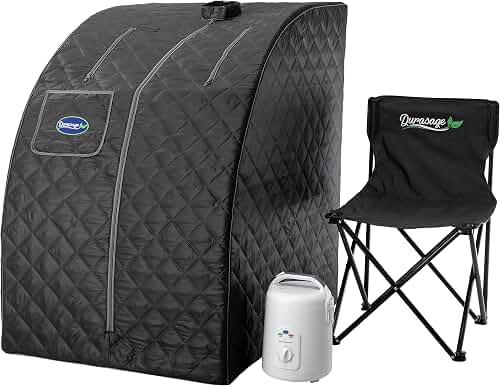
- Portable pop-up "tent" saunas. The fabric loses heat instantly below 50°F and the low-wattage heater cannot keep up.
- Sauna blankets used in the garage itself. The blanket is fine; using it on a 30°F garage floor is not. Bring it inside.
- 1,200-1,500W "2-person" cabins. The wattage math does not work below freezing.
- Saunas with single-pane glass doors. Heat will literally pour out of them.
- Any unit whose spec sheet refuses to publish a minimum operating temperature. If they will not commit on paper, the warranty conversation will go badly later.
For a longer list of pitfalls — wood choice, EMF claims, electrical traps — see our roundup of common infrared sauna buying mistakes to avoid before you order anything.
A quick spec checklist before you click buy
Use this list when shortlisting the best infrared sauna for uninsulated garage cold climate use — spec sheets matter more than brand marketing in this environment:
- Minimum operating temperature published at or below 40°F
- 1,800W+ on 120V (2-person) or 3,000W+ on 240V (3-4 person)
- Floor heater included or available as an add-on
- Canadian hemlock, 5/8"+ tongue-and-groove construction
- Double-pane tempered glass door with magnetic seal
- Carbon or full-spectrum heaters across seven or more panels
- EMF tested below 3 mG at the bench
- Manufacturer based in North America for parts shipping and warranty support
Frequently Asked Questions
What is the minimum garage temperature an infrared sauna will work in?
Most carbon-heater cabins will reach a comfortable 130-140°F session temperature down to about 20°F ambient if they have 1,800W+, a floor heater, and a 45-minute preheat. Below 20°F you generally need supplemental garage heat (a 1,500W oil-filled radiator nearby) or a foil-foam insulation wrap to stay inside the manufacturer's warranty limits.
Do I need to insulate my garage before installing an infrared sauna?
No, but you do need to insulate the sauna itself. Foil-faced rigid foam on the cabin exterior plus a vapor barrier and rubber mat under the floor accomplishes the same thing as insulating the whole garage, at a fraction of the cost. Focus the budget on the cabinet, not the room.
Can I leave an infrared sauna sitting in an unheated garage all winter?
Yes, as long as the cabin is dry and the electronics are protected from condensation. The wood does not crack from cold alone; it cracks from repeated wet-then-frozen cycles. Keep a vapor barrier under the floor, leave the door cracked when not in use so interior air stays dry, and unplug the controller during multi-week cold snaps to avoid moisture damage to the board.
How long does it take to preheat an infrared sauna in a cold garage?
Plan on 40-60 minutes for a properly specced 2-person cabin in a 25-35°F garage, versus 20-25 minutes in a heated room. A smart plug on a timer is the easiest way to handle this — set it to start an hour before your usual session and the cabin is at temperature when you walk out.
Will cold weather damage the wood on a garage sauna?
Cold itself is not the problem. Moisture cycling — sweat absorbed into the wood, then refrozen overnight, then thawed during the next session — is what causes warping and cracking. Vent the cabin after each session, run a dehumidifier in the garage during sweat season, and the wood will last as long as it would indoors.
What electrical do I need for an infrared sauna in my garage?
A dedicated 20-amp circuit, GFCI protected at either the outlet or the breaker, with no other loads sharing the run. 1-2 person cabins use 120V (NEMA 5-20); larger and full-spectrum cabins typically require 240V (NEMA 6-20). Never use an extension cord — the voltage drop hurts performance and the cord becomes a fire risk under continuous load.
Can portable infrared sauna blankets work in a cold garage instead?
The blanket itself heats fine, but lying on a 30°F garage floor defeats the purpose — your back will stay cold no matter what the blanket reads. Sauna blankets are designed for indoor use on a bed or couch. Keep the blanket inside the house and reserve the garage footprint for a proper cabin install if you want the best infrared sauna for uninsulated garage cold climate experience.
Key Takeaways
- Choosing the right best infrared sauna for uninsulated garage cold climate means matching the key features to your specific needs and budget
- Read real customer reviews and check the return policy before you commit
- Also covers: garage infrared sauna freezing winter
- Also covers: cold weather garage sauna installation
- Also covers: sauna for unheated garage minnesota
- Compare value across models — the priciest option is not always the best fit