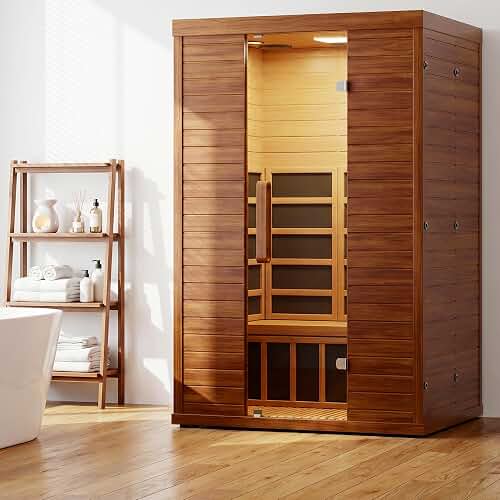
Choosing the best outdoor infrared sauna for Canadian winter means prioritizing cold-weather construction over almost everything else. You need a cabin built from kiln-dried Canadian hemlock or red cedar with tongue-and-groove joinery, carbon or ceramic heaters rated to perform at -30 °C or lower, and a roof system engineered to shed heavy snow loads common from Calgary to Halifax. Add a properly grounded 240V circuit, a covered or partially sheltered pad, and weather-rated door gaskets, and you'll have a sauna that warms up in 25-35 minutes even when the thermometer drops well below freezing. This guide walks through what actually matters when shopping for an outdoor infrared sauna in Canada, what to skip, and which features pay back over a decade of brutal winters.
What makes an outdoor infrared sauna "winter-ready" in Canada?
Not every infrared sauna marketed as "outdoor" can handle a Canadian winter. The marketing copy on Amazon often glosses over thermal performance below 0 °C, but the reality is that ambient temperatures of -20 °C to -40 °C will dramatically increase preheat times and stress every seam, gasket, and electrical component. When evaluating the best outdoor infrared sauna for Canadian winter use, focus on five concrete criteria:
The best best outdoor infrared sauna for canadian winter for your situation depends on how you plan to use it and where.
- Wood thickness and species: Look for 35-45 mm wall panels in Canadian hemlock, western red cedar, or Nordic spruce. Thicker walls insulate better and resist cup/warp from freeze-thaw cycles.
- Heater wattage per cubic foot: Aim for at least 9-10 watts per cubic foot of cabin volume. A 2-person outdoor sauna in Winnipeg needs noticeably more heating capacity than the same unit installed indoors in Vancouver.
- Roof pitch and snow rating: A sloped asphalt-shingle or steel roof rated for 40 lbs/sq ft will shed prairie snow loads. Flat roofs become liability traps by February.
- EMF and ELF shielding: Cold weather doesn't change EMF concerns, but you'll be inside longer per session in winter, so low-EMF carbon heaters (under 3 mG at the bench) matter even more.
- Electrical certification: CSA or cULus marks are essentially mandatory for legal installation and insurance in most Canadian municipalities. ETL-only units may pass inspection in some provinces but always check first.
Indoor vs. outdoor infrared saunas: should you really go outside?
Many Canadians install their sauna in a basement, garage, or three-season room rather than truly outdoors. The advantages are real: faster heat-up times, no snow clearing, longer cabinet life, and lower electrical infrastructure costs. If you have indoor space available, our infrared sauna buying guide covers indoor selection in detail. However, true outdoor placement makes sense when you want a spa-like ritual (snow cooldown, hot tub adjacency), have limited indoor square footage, or are building a backyard wellness area. The trade-off is roughly 30-50% higher annual electricity costs in winter and shorter heater element lifespans due to thermal cycling.
Cabin construction: what to demand for Canadian winters
Wood species and thickness
Canadian hemlock is the most common choice and performs well down to about -25 °C with proper sealing. Western red cedar costs 25-40% more but resists rot, insects, and UV better — a real advantage if your sauna sits on an exposed deck. Nordic spruce, found on higher-end European units, handles severe cold beautifully but is rarely available through Amazon Canada. Avoid pine and any "composite cedar" or veneered panels for outdoor use; they delaminate after two or three winter cycles.
Roof and waterproofing
The roof is where cheap outdoor saunas fail first. You want a true secondary roof — typically asphalt shingles or steel sheeting over a vapor barrier — not just thicker wood. The cabin's seam between roof and walls should be caulked from the factory and re-sealed annually with a flexible polyurethane sealant. Inspect for rubber gaskets around the door and window; silicone-based gaskets stay pliable in cold weather, while cheap EPDM versions stiffen and leak heat below -15 °C.
Floor and base
Never set an outdoor sauna directly on grass, gravel, or pavers without an air gap. Build a 4-inch pressure-treated wood platform with at least 2 inches of clearance from the ground, or pour a concrete pad with a vapor barrier. Snow drift can pack against an unraised base, forcing moisture into the floor panels and causing the heater elements to short within a winter or two.
Heater technology: carbon vs. ceramic vs. full spectrum
Carbon-panel heaters dominate the outdoor sauna market because they produce even, gentle infrared at lower surface temperatures, which is gentler on cold cabin starts. Ceramic rod heaters produce more intense heat from a smaller surface area but can crack from rapid thermal expansion when your cabin is sitting at -25 °C and you crank it on full. Full-spectrum heaters add near and mid-infrared on top of far-infrared, which is great for therapeutic use but adds cost and complexity. For most Canadian buyers, dual-zone carbon heaters with floor heaters (often missing on cheap units) are the sweet spot. Read our far vs. near vs. full spectrum infrared sauna guide for a deeper breakdown.
EMF safety in winter
Because Canadian winter sessions tend to run longer (people stay inside longer when it's -30 °C outside), choosing a verified low-EMF model matters. Reputable manufacturers publish third-party EMF reports showing readings under 3 mG at body locations. We compile our top picks in our best low-EMF infrared saunas roundup — note that not every model on that list is rated for true outdoor installation, but the heater technology benchmarks apply universally.
Electrical and installation requirements
Most 2-3 person outdoor infrared saunas draw 1800-2400 watts and run on a standard 120V/15A circuit. Larger 4-person units and any sauna with floor heaters typically require a dedicated 240V/20A circuit — and outdoor installation always requires GFCI protection and a weatherproof disconnect within sight of the unit. Expect to pay a licensed electrician $600-1,200 CAD for a proper outdoor sub-panel feed. Many Canadian municipalities also require a permit; check before you order. Our how to install a home infrared sauna walkthrough covers indoor installation, but the wiring fundamentals carry over.
Estimated operating costs through a Canadian winter
A 2400-watt outdoor sauna preheating for 35 minutes and running for a 45-minute session consumes roughly 3.2 kWh per use. At an average Canadian electricity rate of $0.14/kWh, that's $0.45 per session in mild weather. In January, expect that to climb 30-50% as the heater works harder to maintain set temperature against cold cabin walls. Three sessions per week translates to roughly $25-40/month in winter electricity — manageable, but worth factoring into your total cost of ownership. For a fuller cost breakdown, see our infrared sauna cost and budget guide.
What size sauna do you actually need outdoors?
Outdoor saunas tend to be used more socially than indoor units — friends after a hot tub, post-ski warm-ups, weekend rituals. A 2-person unit is too tight if you want any flexibility. We generally recommend 3-person cabins as the practical minimum for outdoor placement, since the marginal cost of going up one size is modest and the larger cabin retains heat better through the door cycles that are inevitable when entertaining. Our best 2-person infrared saunas guide covers smaller indoor options if budget is the priority.
Setup tips specific to Canadian climates
Site selection
Place the sauna where it gets winter sun if possible, but protected from prevailing wind. A north-facing wall of your house is ideal as a windbreak. Avoid placing under deciduous trees — falling leaves clog the roof gaskets in autumn, and ice-loaded branches are a winter hazard.
Shoulder-season prep
In October, inspect all external caulking, replace door gasket if it shows compression set, and lubricate hinges with a winter-grade silicone spray. Run a full empty preheat cycle to burn off any moisture absorbed during fall rains before the first hard freeze.
Winter operation
Always preheat with the door closed and any roof vents shut. Add 10-15 minutes to your usual preheat time when ambient is below -10 °C. After your session, leave the door cracked open for 10-20 minutes to let interior humidity escape before fully closing — moisture trapped inside a sub-freezing cabin will freeze on heater elements and reduce their life.
Snow management
Clear snow from the roof and the area around the door before each use. Heavy snow against the cabin walls accelerates wood moisture absorption and can warp lower panels by spring.
How to shop on Amazon for a Canadian-winter-ready outdoor sauna
Amazon listings can be vague about outdoor suitability. Filter your search by these signals before you click buy:
- Listing explicitly states "outdoor use" or "indoor/outdoor" — not just "weather resistant."
- Roof shown in product images is sloped and shingled or metal-clad, not flat plywood.
- Specs include CSA or cULus certification (not just CE, which is European).
- Wall thickness is listed at 35 mm or greater.
- Manufacturer offers a written cold-weather operation warranty, not just a generic 1-year parts warranty.
- Reviews from Canadian buyers mentioning multi-winter performance — sort reviews by "most recent" and look for the Canadian flag.
For a broader look at common pitfalls, our infrared sauna buying mistakes to avoid article highlights the gotchas that cost first-time buyers the most money.
Maintenance schedule for outdoor infrared saunas in cold climates
Spring inspection should include: re-caulking all roof seams, sanding any UV-greyed exterior wood and applying an oil-based outdoor sauna sealer, checking heater element resistance with a multimeter, and vacuuming dust from inside the heater panels. Mid-summer, wipe interior benches with a mild solution of water and white vinegar. In fall, replace the door gasket if compressed, check the GFCI breaker, and run a 90-minute high-temperature cycle to dry the cabinet thoroughly. Our how to clean and maintain an infrared sauna guide details the cleaning chemistry; outdoor units just need the schedule applied more aggressively.
Frequently Asked Questions
Can an infrared sauna actually work in -30 °C Canadian winter weather?
Yes, but with caveats. A properly rated outdoor infrared sauna with 35+ mm walls, sloped roof, silicone door gaskets, and sufficient heater wattage will preheat to 55-60 °C in 35-50 minutes at -30 °C ambient. Below -35 °C, expect preheat times to extend significantly and consider a thermal cover or insulating skirt around the base. Avoid running the unit if cabin interior is below -25 °C without a slow warm-up cycle, since rapid heater activation against ice-cold wood can stress both the elements and the panels.
Do I need a permit for an outdoor infrared sauna in Canada?
Most Canadian municipalities require an electrical permit for the dedicated outdoor circuit, and many also require a building permit if the sauna sits on a permanent foundation or exceeds a certain floor area (often 10 sq m). Rules vary widely by province and even by municipality — Toronto, Vancouver, Calgary, and Montreal all have different thresholds. Always check with your local building department before purchasing.
What's the difference between an outdoor infrared sauna and a traditional Finnish outdoor sauna?
Traditional Finnish saunas use wood-fired or electric stoves to heat the air to 70-100 °C and rely on steam (löyly) for the experience. Infrared saunas use direct radiant heat panels operating at 45-65 °C cabin temperature with no steam. Infrared units use less electricity, heat up faster, and are dramatically easier to install outdoors because they don't require chimney clearances or fire ratings. They produce a different kind of sweat-induced therapeutic experience — drier, lower-temperature, and generally tolerable for longer sessions. See what is an infrared sauna for the underlying technology explanation.
How long do outdoor infrared saunas last in Canadian climates?
With proper maintenance, expect 10-15 years from the cabin and 6-10 years from the heater elements. Outdoor units in Canadian winters typically see heater life on the lower end of that range due to thermal cycling stress. Cabin life depends almost entirely on whether you maintain the exterior seal and prevent moisture infiltration; neglected outdoor saunas can show serious wood degradation within 4-5 years.
Can I use my outdoor infrared sauna year-round, or should I winterize it?
You can absolutely use it year-round, and that's typically why people install outdoors. There's no formal "winterization" needed if you use the sauna regularly through winter — the routine preheating actually helps drive out moisture. If you plan extended periods of disuse (a month or more), disconnect power at the breaker, leave the door slightly open to prevent moisture accumulation, and cover with a breathable sauna cover rated for snow loads.
How often should I use my outdoor infrared sauna for health benefits?
Most wellness practitioners suggest 3-4 sessions per week of 30-45 minutes each, ramping up gradually if you're new to infrared. Outdoor placement actually encourages consistent use because the ritual feels special — but listen to your body, hydrate well, and don't push session length too far. Our guide on how often you should use an infrared sauna covers the research in detail.
Will an outdoor infrared sauna increase my home insurance?
It can. Some Canadian insurers treat outdoor saunas as "detached structures" requiring a rider, while others bundle them under existing coverage if the value is under a threshold (often $5,000-10,000). The unit must be installed by a licensed electrician with permits filed for most insurers to cover claims. Notify your insurance company before installation to avoid coverage gaps — particularly important given the fire risk profile of any high-wattage outdoor electrical appliance.
Final thoughts
The right outdoor infrared sauna for Canadian winter use isn't necessarily the most expensive — it's the one matched to your climate zone, electrical situation, and usage pattern. Prioritize cabin construction, heater quality, and proper installation over fancy features like chromotherapy lighting or built-in Bluetooth. Get the fundamentals right and a quality outdoor infrared sauna will deliver a decade-plus of post-ski warm-ups, snowy morning rituals, and dark January evenings of restorative heat. Once you've chosen your unit, our how to use an infrared sauna primer will help you build a sustainable session routine that maximizes benefit through the long Canadian winter.
Key Takeaways
- Choosing the right best outdoor infrared sauna for canadian winter means matching the key features to your specific needs and budget
- Read real customer reviews and check the return policy before you commit
- Also covers: outdoor infrared sauna minus 30 celsius
- Also covers: canadian winter rated infrared sauna
- Also covers: weatherproof outdoor sauna snow ice
- Compare value across models — the priciest option is not always the best fit