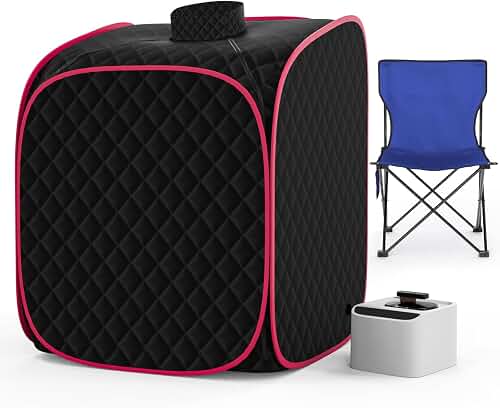
The quietest infrared sauna for light sleepers in a small condo typically runs at 35 to 45 decibels — about the same as a whisper or a refrigerator hum at the far end of the room. For most condo dwellers, that means choosing a model with a brushless DC ventilation fan (or no active fan at all), ceramic or carbon heaters with low-current draw, and a rigid hemlock or basswood cabinet that doesn't resonate. Skip units with old AC squirrel-cage blowers, chime-style controllers, or stereo systems with cheap amplifiers — those are the parts that wake partners through bedroom walls.
Why noise matters more in a small condo than in a house
A detached house gives a sauna roughly 20–30 feet of air gap and several layers of drywall between the cabin and any sleeping area. A 600–900 square foot condo typically gives you 10 feet, a single 2x4 partition wall, and a hollow-core door. Sound that would dissipate in a basement family room reaches the bedroom essentially unattenuated. Add a downstairs neighbor whose ceiling is your floor, and structure-borne vibration from the heater relays becomes a second noise channel entirely separate from airborne fan whine.
When shopping for quietest infrared sauna for light sleepers, it pays to compare specs, capacity, and real-world runtime before committing.
This is why the quietest infrared sauna for light sleepers isn't always the model with the lowest published decibel rating. Manufacturers measure airborne noise at one meter in a treated room. They don't measure the click of a mechanical thermostat at 3 a.m. or the low-frequency resonance a thin cedar panel adds when the heater cycles on. Both of those are exactly what wake a sleeping partner in a condo.
What actually makes an infrared sauna quiet
Three components produce nearly all the noise in a modern infrared sauna: the ventilation fan, the heater control circuit, and the optional entertainment system. Understanding each lets you shop by part rather than marketing copy.
1. Ventilation fan type
Most infrared cabinets include a small ceiling or rear-wall fan to manage humidity and circulate warm air. Older units use AC-powered axial fans that hum at 50–60 Hz and produce a constant 45–55 dB drone. Mid-range 2026 models have moved to brushless DC fans rated 25–35 dB, which sound more like a high-end PC case fan than a bathroom exhaust. Premium models offer convection-only designs with no fan at all, relying on the cabinet's vent geometry to move air passively. For a light sleeper, the no-fan and DC-fan tiers are the only ones worth considering.
2. Heater control circuit
Carbon and ceramic heaters draw a lot of current, and that current has to be switched on and off many times per session to hold target temperature. Cheap saunas do this with mechanical relays that produce an audible click every 30–90 seconds. Better units use solid-state relays (SSRs) that switch silently. If a product listing mentions "PID controller" or "SSR temperature control," that's a good sign. If it just says "digital thermostat," ask the seller before buying — digital displays don't tell you anything about whether the switching itself is silent.
3. Audio system bypass
Built-in Bluetooth speakers and FM radios add cost and noise. The amplifier circuits in budget saunas often emit a faint 60 Hz hum even when no audio is playing, audible only in a perfectly quiet room — which is precisely the environment a light sleeper notices. If you want music during sessions, use your phone and a pair of bone-conduction headphones, and choose a sauna without an integrated stereo.
Decibel benchmarks to compare against
Here is what each noise floor actually sounds like in a real condo bedroom 10 feet away:
- 20–30 dB: Inaudible behind a closed bedroom door. This is the goal.
- 30–40 dB: A soft refrigerator. Sleepers won't notice unless already half-awake.
- 40–50 dB: Light rain on a window. Most light sleepers will notice; some will wake.
- 50–60 dB: Normal speech. Unsuitable for any shared-wall installation.
- 60+ dB: Bathroom exhaust fan. Will wake almost anyone within two rooms.
Aim for an at-the-cabinet rating under 40 dB. Subtract about 6 dB for every doubling of distance in open air, and another 5–10 dB for a closed door, and you get a workable mental model of what reaches the bedroom.
Features to look for in a condo-friendly low-noise sauna
When reading product pages and Amazon Q&A sections, scan specifically for these terms:
- "Brushless DC fan" or "silent ventilation" — specs better than 35 dB.
- "Solid-state relay" or "SSR" — no audible click on heater cycle.
- "Carbon panel heaters" over ceramic tubes — carbon panels heat by radiation only and don't pop or tick as they expand.
- "Tongue-and-groove hemlock" or "thick-wall basswood" — rigid joinery damps cabinet resonance better than glued panel saunas.
- "Soft-close door" with magnetic latch — the slam of a glass-front sauna door is a real noise source if you end sessions late at night.
- 110V/15A circuit — smaller draw means smaller relays and quieter switching, and you won't need a dedicated 240V install that a condo strata board may forbid.
For a deeper dive into how those electrical specifications interact with cabinet build quality, our infrared sauna buying guide walks through the full spec sheet a beginner should ask for before paying.
Features to avoid
Some features are red flags for noise specifically, even if they look good in the marketing photos:
- External "chromotherapy" controller boxes with their own cooling fans. Two fans means twice the noise floor.
- FM radio antennas and CD slots — these are almost always paired with bargain amplifier boards that hum.
- Wall-mounted touchscreens that run a constant background backlight inverter; some emit a faint coil whine.
- Pull-cord lights instead of switches — the mechanical cycling clicks loudly at night.
- Stacked-tube ceramic heaters — the metal end-caps tick noticeably as they heat and cool.
Why portable blanket-style saunas can be the quietest option
If your condo is small enough that a cabinet sauna isn't realistic anyway, an infrared blanket or low-EMF panel mat can be effectively silent. There's no fan, no door, no relay clicks — just resistive heating elements and a fabric shell. The trade-off is lower peak temperature and a less immersive experience, but for a studio apartment with a partner who sleeps four feet away, this may be the only humane choice. Our roundup of the best portable infrared saunas covers the form factors that work in 400–700 sq ft units, and the companion piece on the best infrared sauna blankets covers the truly silent options.
Condo-specific setup tips that lower perceived noise
Even a moderately noisy sauna can be made bedroom-acceptable with smart placement. Try each of these before you assume you need to return the unit.
Decouple from the floor
Place the sauna on a 1/2-inch closed-cell foam mat or four sorbothane pucks. This prevents heater-cycle vibration from transmitting through the slab into your floor joists or your downstairs neighbor's ceiling. Cost: under $40. Effect: removes most of the low-frequency component a light sleeper actually wakes to.
Orient the vent away from sleeping areas
Every cabinet sauna has a ventilation port. Rotate the cabinet so that port faces a window, a closet, or an exterior wall — never the bedroom door. A 90-degree rotation can drop perceived noise by 5–8 dB at the listening position.
Add a rug between sauna and bedroom
Hard floors in open-plan condos act as reflectors. Even a small 5x7 area rug between the sauna and the bedroom doorway absorbs mid-frequency heater click and door slam by several dB. A bookcase against a shared wall does the same job for less visual cost.
Use the timer to avoid late sessions
The quietest sauna is one that isn't running. If you typically sauna after work and worry about waking a partner who goes to bed at 10 p.m., set your finish time at 9:15 p.m. with a 15-minute cooldown. Our guide to how often you should use an infrared sauna covers session length and frequency choices that fit a normal evening schedule.
Power and installation in condos
One overlooked noise source is the building wiring itself. A sauna pulling 1,500–1,800 watts on a circuit shared with a refrigerator can cause the fridge compressor to cycle harder and louder. Plug the sauna into a circuit that doesn't share with appliances or HVAC. If your unit has knob-and-tube wiring, consult an electrician before installing a sauna at all.
Strata bylaws in many condo buildings restrict 240V dedicated circuits. The good news: nearly every one- or two-person infrared sauna in 2026 runs on a standard 15-amp 110V outlet, so you won't usually need approval. If you're unsure how to physically position the cabinet, the home infrared sauna installation guide walks through clearance, ventilation, and floor protection in tight spaces.
EMF and noise are correlated
Low-EMF saunas tend to also be quieter, because both characteristics come from the same engineering decisions: shielded wiring, brushless motors, solid-state switching, and avoidance of cheap amplifier circuits. If you've shortlisted units from the best low-EMF infrared saunas list, you've probably already filtered out most of the loudest options on the market. This is not a coincidence — the brands that engineer for clean electricals also tend to engineer for clean acoustics.
How to test a sauna for noise once it arrives
Most retailers will accept returns within 30 days. Use that window. On day one, run the sauna empty at your normal session temperature in its final location, with bedroom doors and windows in their normal nighttime positions. Sit in the bedroom with the lights off — the absence of visual distraction lets your hearing adapt to the room's actual noise floor. If you hear the sauna at all from the bed, you have a problem to fix or a unit to return.
Repeat the test after the cabinet has been used a dozen times. Wood saunas creak more during their first weeks as the panels acclimate to your indoor humidity, then quiet down. The fan, by contrast, tends to get slightly louder over time as bearings wear — not the other way around. A sauna that's borderline at 30 days will be unacceptable at 6 months.
Realistic budget expectations
Genuinely quiet, condo-appropriate one-person infrared saunas start around $1,400 and reach $3,500. Below $1,000 you're almost guaranteed to get an AC fan, a mechanical relay, and a thin-panel cabinet that resonates. Above $4,000 you're paying for full-spectrum heaters and chromotherapy lighting that don't make the cabinet quieter. The acoustic sweet spot sits at $1,800–$2,800, where you reliably get a DC fan, an SSR, and decent joinery without paying for extras a light sleeper doesn't need.
Frequently Asked Questions
What is the quietest infrared sauna for light sleepers under $2,000?
In the under-$2,000 segment, the quietest options are one-person cabinet saunas with brushless DC ventilation fans and solid-state heater control, typically rated 30–38 dB at the cabinet. Look for hemlock or basswood construction, a 110V single-circuit power requirement, and explicit mention of "silent" or "low-noise" ventilation in the manufacturer's spec sheet. Infrared sauna blankets, while a different product category, are nearly silent and frequently sell for under $700 if a full cabinet doesn't fit your space.
How many decibels does a typical infrared sauna produce?
Modern carbon-heater infrared saunas measure 30–55 dB at one meter from the cabinet, depending on fan type and heater control. Budget units with AC squirrel-cage fans run 45–55 dB — about the loudness of a quiet refrigerator. Premium models with DC fans or convection-only ventilation run 30–38 dB, similar to a soft whisper. Manufacturers don't always publish these numbers, so checking Amazon Q&A or asking the seller directly is often the only way to confirm.
Will an infrared sauna disturb my downstairs neighbor?
Airborne noise rarely transmits through concrete floors in modern condos, but structural vibration does. The main risk is relay clicks and heater-element expansion ticks transmitting through the slab. Place the cabinet on a 1/2-inch foam mat or sorbothane pucks to decouple it, and choose a unit with a solid-state relay rather than a mechanical one. Wood-frame condos with joist floors are more vulnerable; in those buildings, consider an infrared blanket or panel mat instead of a cabinet sauna.
Are carbon heaters quieter than ceramic heaters?
Yes, generally. Carbon panel heaters are flat, low-mass, and expand uniformly, which means they don't produce the audible ticking that ceramic tubes do as they cycle through temperature changes. Ceramic tubes have metal end-caps that contract and expand against their mounts, producing periodic pops. If silence is the priority, choose a sauna with full carbon-panel heaters rather than a hybrid carbon-plus-ceramic design.
Can I run an infrared sauna at night without waking my partner?
Yes, if you choose a sub-40 dB unit, place it at least 15 feet from the bedroom with a closed door between, and put it on a foam mat to kill vibration. Set the heater to preheat for 10–15 minutes before your session rather than running it hard from a cold start, since the rapid initial cycling is when relay clicks are most frequent. End sessions at least 30 minutes before your partner's bedtime so cabinet cooldown doesn't create late-night cracking sounds as the wood contracts.
Is an infrared sauna blanket actually silent?
Effectively, yes. Blankets and panel mats have no fan, no door, and no large mechanical components. The only audible noise is a faint controller click when the temperature setpoint is reached, and on premium units even that is solid-state. For studio condos or shared bedrooms, a blanket is the most reliably quiet option on the market and the lowest-friction starting point if you're not sure you'll use a full cabinet often enough to justify the footprint.
How do I soundproof an infrared sauna already installed?
You can't soundproof the sauna itself without voiding warranty, but you can treat the surrounding space. Add heavy curtains to nearby windows, place a rug between the cabinet and the bedroom door, and put a bookcase or upholstered chair against any shared wall. If the fan is the worst offender, ask the manufacturer whether a replacement DC fan is available — many brands sell quieter aftermarket units for $40–$80 that install in 20 minutes with a screwdriver.
Key Takeaways
- Choosing the right quietest infrared sauna for light sleepers means matching the key features to your specific needs and budget
- Read real customer reviews and check the return policy before you commit
- Also covers: silent infrared sauna condo neighbors
- Also covers: low noise sauna heater decibels
- Also covers: quiet home sauna for thin walls
- Compare value across models — the priciest option is not always the best fit