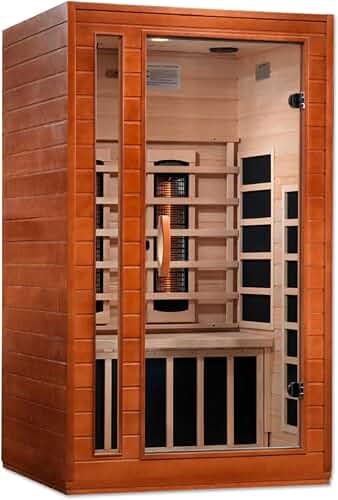
For cruisers living aboard 30- to 50-foot sailboats, the best portable infrared sauna for sailboat liveaboards is one that survives chronic salt air, draws under 10 amps from a typical shore-power pedestal, folds into a quarter-berth lazarette, and resists the mildew that haunts every locker below the waterline. After cross-referencing portable sauna specs against the realities of cruising — 15-amp shore connections, condensation behind every cabinet, and the corrosive bath of windward spray — the short answer is a low-wattage sit-up tent or blanket-style far-infrared unit with synthetic non-absorbent interior fabric, removable carbon heating panels, and minimal metal trim that can pit in saltwater. Below is what actually matters when you shop in 2026.
Why a Portable Infrared Sauna Belongs on a Sailboat
Liveaboards face a damp, salty, chronically-chilled cabin environment that punishes joints and immune systems. A portable infrared sauna delivers radiant heat directly to the body without heating the cabin air to unbearable levels — a critical distinction when your boat already has 60% relative humidity at the nav station and zero ventilation underway. Unlike a traditional Finnish sauna that would boil paint off the bulkheads, far-infrared units operate at 110°F–140°F ambient while raising core temperature through radiant absorption. For a couple in their fifties cruising the Caribbean or the Pacific Northwest, that means sore-shoulder relief after a long passage, faster recovery from cold-water swims, and a routine that mimics the wellness rituals available to land-dwellers.
The best best portable infrared sauna for sailboat liveaboards for your situation depends on how you plan to use it and where.
The Saltwater Problem: What Actually Kills Portable Saunas at Sea
Three failure modes dominate. First, ferrous frame components — even powder-coated steel rods — develop bloom rust within one Atlantic crossing. Second, cotton-blend or canvas interior liners absorb salt mist, then refuse to dry in a closed cabin, breeding mildew along the seams. Third, exposed control units with unsealed buttons fail when chloride ions creep past the membrane keypad. The best portable infrared sauna for sailboat liveaboards mitigates all three by using fiberglass or anodized aluminum frame poles, polyester or PU-coated interior shells, and a separate plug-in controller that lives in a Pelican case between sessions.
Power Budget: AC, Inverter, and Solar Realities
Most sailboat liveaboards have one of three power scenarios: 30-amp shore service at the dock, a 2000–3000W inverter running off a lithium house bank at anchor, or solar-only off-grid days. Portable infrared saunas range from 600W (single-person blanket) up to 1400W (sit-up tent with four panels). For inverter use, target under 1000W continuous draw — that keeps the load inside what a 2000W pure-sine inverter handles without sag, and it preserves capacity for the fridge compressor that will inevitably cycle mid-session. Avoid any unit advertising a "turbo" or "high" mode above 1500W; that ceiling will trip a 15A pedestal breaker the moment your water heater also fires. Read our infrared sauna buying guide for a deeper breakdown of how wattage maps to heat-up time and session intensity.
Stowage: Cubic Feet, Not Square Feet
Land-based reviews rate portable saunas on assembled footprint. Aboard a sailboat, the only number that matters is packed volume. A sit-up tent style typically folds to roughly 24 x 18 x 6 inches — about the size of a folded gennaker bag — and fits in a quarter berth, under the V-berth insert, or in a cockpit locker if you double-bag it against spray. Sauna blankets compress smaller still, often to 18 x 14 x 4 inches, and slide behind settee cushions. Avoid hard-walled "cabinet" portable saunas marketed as portable but shipped as 80-pound flat-packs; those are designed for spare bedrooms, not boats. Our roundup of portable infrared saunas compares packed dimensions across the main category leaders.
Tent vs Blanket: Which Format Wins Below Decks
Sauna blankets win on stowage and power draw — they consume 500–800W and roll up like a sleeping bag. They lose on usability: you must lie flat for 30–45 minutes, which is impossible to do safely while heeled or in a rolly anchorage. Sit-up tents win on ergonomics — you sit on a folding stool inside a zippered enclosure with your head out — and they handle a 15-degree heel better because your spine stays vertical. For a typical liveaboard couple, the tent style is the more practical answer at the dock, while a blanket may be the better off-watch tool underway in calm conditions. Couples shopping should also weigh whether one sauna serves both partners on a rotating schedule or whether they want a 2-person model; our breakdown of 2-person infrared saunas covers that decision, though most 2-person units are too large for a 35-foot sloop.
Materials Checklist for Marine Use
When evaluating a unit for sailboat duty, run this checklist:
- Frame: Fiberglass shock-corded poles, anodized aluminum, or stainless. Reject mild steel even if powder-coated.
- Interior shell: Polyester taffeta, PU-coated nylon, or oxford weave. Reject cotton, linen, or any "natural fiber" interior.
- Heating panels: Removable carbon-fiber sheets sealed in polymer film. The seal matters more than the carbon spec.
- Wiring junctions: Look for IP-rated connectors at every panel-to-controller junction.
- Controller: Detachable corded controller you can stow in a dry locker between uses.
- Zippers: YKK plastic-coil zippers. Metal zippers seize within one season at sea.
EMF Concerns in a Confined Cabin
A boat's cabin is a small Faraday cage of aluminum spars, stainless rigging, and grounded through-hulls. Electromagnetic fields from a poorly-shielded sauna echo more than they would in a frame house with wood studs. If you spend three or four sessions a week inside the cabin, low-EMF construction shifts from "nice to have" to "genuinely worth the extra $150." Our guide to low-EMF infrared saunas covers what milligauss readings to look for and which portable brands actually publish third-party test data versus marketing claims.
Setup Locations Aboard
The three workable spots on a typical 35–45-foot sloop are the saloon sole between the settees, the aft cabin with the door closed, and the cockpit under a Bimini at anchor on a calm day. The saloon sole offers the best stability and access to a galley outlet, but you will need to fold the cabin table or live with a tight squeeze. The aft cabin contains the heat and moisture, which protects the rest of the boat's varnish and cushions. The cockpit option is delightful at sunset in 75-degree air but only works at flat anchor — even a 5-knot beam wind will rattle a tent loud enough to ruin the experience.
Maintenance Routine for Saltwater Liveaboards
After each session, wipe the interior with a fresh-water-dampened microfiber, then towel-dry. Once weekly, wipe with a 1:10 white vinegar solution to neutralize salt residue. Between long passages, fully disassemble the unit, rinse the shell in fresh water at the marina spigot, hang to dry in the cockpit, and stow the controller separately in a desiccant-loaded Pelican case. The same fundamentals apply ashore — see our walkthrough on how to clean an infrared sauna — but the cadence triples at sea because the salt load never stops.
Power-Up and Heat-Up Times
A 600W blanket reaches its 150°F set point in 8–12 minutes. A 1000W tent typically reaches 130°F ambient in 15–20 minutes — slower because it heats a larger air volume. Plan your session accordingly: if you only have 30 minutes of generator runtime before quiet hours at a mooring field, the blanket gets you a usable session; the tent does not. Conversely, if you are on shore power for an evening, the tent's longer heat-up rewards you with a richer dry-heat experience that more closely mimics a land-based cabin.
How to Use a Portable Sauna Underway vs at Anchor
Underway, restrict use to passages with under 10 degrees of heel and under 2-foot seas. Even a sit-up tent becomes a tipping hazard when the boat rolls 20 degrees through a quartering swell. At anchor, the calculus is different — a calm cove with good holding lets you run a 45-minute session safely. Always wear a swimsuit or wrap rather than going fully nude; if a halyard slaps and you need to deal with it fast, you do not want to emerge on deck in front of the boat anchored 50 feet away with nothing on. For more on session attire, see our guide on what to wear in an infrared sauna.
Budget Realities
Quality portable units for sailboat use run $250–$700. Anything under $200 typically uses cotton interiors and uncoated steel frames that will not survive a season at sea. Anything over $1000 is usually a luxury blanket with premium materials that overshoots what a boat environment will preserve long-term. Budget for a $400 unit plus $50 in marine-grade aftermarket accessories: a silicone-coated stuff sack, a dry-bag for the controller, and a small dehumidifier sachet rotation.
Frequently Asked Questions
Can I run a portable infrared sauna off a 2000W marine inverter?
Yes, provided the sauna draws under 1200W continuous and your house bank can sustain roughly 100 amps DC for the duration of the session. A 400Ah lithium bank handles a 45-minute 1000W session with margin. Lead-acid banks will sag noticeably; expect the inverter to brown out the chartplotter if you do not isolate sensitive circuits first.
Will salt air destroy the heating panels?
Sealed carbon-fiber panels in polymer film are surprisingly resilient — the carbon itself does not corrode. The failure point is almost always the wiring harness or the connector between the panel and the controller. Buy a unit with replaceable panels and keep one spare connector pigtail aboard.
What is the smallest portable infrared sauna that still works for a 6-foot adult?
Standard sit-up tents are sized for users up to about 5'10". Taller cruisers should look at oversized tents with a 30-inch interior height or use a blanket configuration where height is irrelevant. See our roundup for infrared saunas for tall people over 6 feet for specific picks that accommodate longer torsos.
Is a sauna blanket safer on a heeled sailboat than a tent?
Yes, in calm conditions. You lie flat on the settee, the blanket's center of gravity stays low, and there is no tipping hazard. The trade-off is that you cannot quickly exit if something on deck demands attention, so only use a blanket at anchor with a trusted partner aware that you are mid-session.
How do I handle the humidity a sauna adds to my cabin?
Run the unit with a hatch or port cracked for ventilation, and follow each session with 20 minutes of forced-air drying from a 12V fan aimed at the location. If you have a dehumidifier on shore power, run it for an hour after the session. A boat is already fighting condensation; do not add an hour of high-humidity output without a counter-plan.
Can I use a portable infrared sauna while crossing oceans?
Only during settled-weather windows in the trades or doldrums where heel stays under 10 degrees and crew is fresh enough to safely handle a sail change mid-session. Most ocean sailors save sauna use for landfall layovers in protected anchorages where conditions are reliably calm.
What is the difference between far, near, and full-spectrum infrared for boat use?
Far-infrared dominates the portable market and is the right choice for sailboat liveaboards: lower wattage, simpler electronics, and proven materials. Full-spectrum units add near-infrared LED arrays that draw more power and introduce additional failure points in a marine environment. Our far vs near vs full-spectrum guide walks through the trade-offs in detail.
Any lessons from full-time RV users that translate to sailboats?
Many, actually — RV nomads face similar power, stowage, and humidity constraints. The Relax Sauna for full-time RV nomads writeup covers durability tricks that translate directly to liveaboard cruising, especially around controller stowage and power-supply protection.
Key Takeaways
- Choosing the right best portable infrared sauna for sailboat liveaboards means matching the key features to your specific needs and budget
- Read real customer reviews and check the return policy before you commit
- Also covers: sauna for liveaboard sailboat cabin
- Also covers: saltwater corrosion resistant portable sauna
- Also covers: boat liveaboard wellness infrared sauna
- Compare value across models — the priciest option is not always the best fit