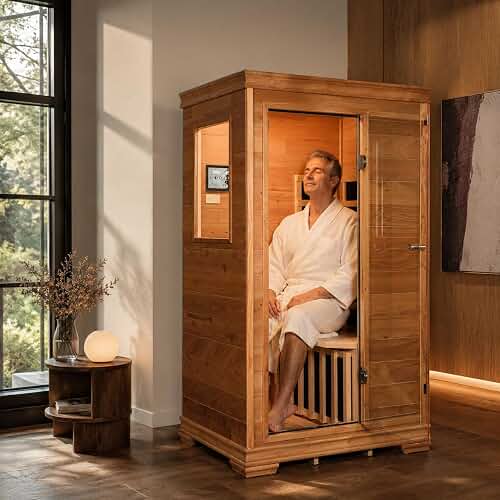
Installing an infrared sauna on a second-floor hardwood room is doable in most modern homes, but it requires three things done right: confirming your floor can carry the dead and live load (residential code targets 40 psf live, and most one- to two-person cabins fall well inside that), protecting the hardwood from heat and sweat with a vapor-permeable mat or interlocking tile, and running a dedicated 15A or 20A circuit per the manufacturer's spec. This guide walks through how to install infrared sauna on second floor hardwood step by step, from joist verification to final commissioning, so you avoid sagging boards, voided warranties, and expensive do-overs.
Can a Second-Floor Hardwood Room Actually Hold an Infrared Sauna?
The short answer for most homes built to International Residential Code is yes. Residential second floors are engineered for a minimum live load of 40 pounds per square foot, plus a 10 psf dead load for the structure itself. A typical one-person infrared cabin weighs 200 to 280 pounds assembled and sits on roughly 9 to 12 square feet of floor, meaning the static load distribution is well under what the floor was designed to absorb. Add a 200-pound user and you are still inside the envelope.
The best how to install infrared sauna on second floor hardwood for your situation depends on how you plan to use it and where.
Two-person cabins run 300 to 420 pounds and cover 16 to 20 square feet. Three- and four-person units begin to push 600 to 900 pounds, and full-spectrum models with thicker hemlock or basswood panels add another 15 to 20 percent. Older homes (pre-1960) with 2x8 joists on 16-inch centers and spans over 14 feet should be evaluated by a structural engineer or a contractor with a load chart, especially for the larger sizes. Bouncy floors, visible joist sag, or any prior water damage to the subfloor are red flags that warrant a professional walkthrough before any cabin lands upstairs.
One detail many DIY installers miss: orient the sauna so its longer side runs perpendicular to the joists. That spreads the load across more framing members instead of concentrating it between two. If you can identify the joist direction with a stud finder or by checking the basement ceiling below, you can position the cabin to minimize deflection.
How Infrared Saunas Differ From Traditional Steam Units Upstairs
This is the part that makes an upstairs install practical in the first place. Traditional Finnish saunas pour water on rocks, generating steam, runoff, and surface temperatures north of 180 degrees Fahrenheit. They typically need a tiled, sloped floor with a drain and a vapor barrier under the wall framing. Infrared cabins skip all of that. Surface temperatures inside the room peak around 125 to 145 degrees, no water is added, and the only moisture produced is body sweat. For background on how the heating system actually works, see our explainer on what an infrared sauna actually is.
The practical upshot: no drain is required, no waterproofing membrane in the wall, no risk of saturating the subfloor in the way a steam sauna can. Heat radiating downward from the cabin floor is also minimal because most modern units have an insulated base panel, and the floor heater (when included) only reaches 110 to 120 degrees, well below what could scorch finished oak, hickory, or engineered hardwood.
Protecting the Hardwood Itself
Even though infrared saunas are low-moisture, you should never set the cabin directly on bare hardwood. Three things will eventually damage the floor if you do: sweat drips that wick under the base panel, scratches from sliding wall sections during assembly, and trapped humidity between the cabin and the boards that can darken or cup the wood over time.
The best protective base layers, in order of how most installers rank them:
- Interlocking rubber gym tiles (3/8" or 1/2" thick): Dense, easy to cut, lifts the cabin off the floor, allows airflow underneath, and absorbs minor leveling differences. The most forgiving option for older hardwood.
- Vinyl or LVT mat cut to footprint: Lower profile, waterproof, easy to wipe clean. Slightly less ventilation under the base, so wipe up any sweat that escapes the cabin promptly.
- Marine-grade plywood with a sealed top coat: A cleaner aesthetic when the cabin sits in a finished room. Adds maybe 1/2 inch of height and distributes point loads from the footings.
- Felt or rubber furniture pucks at each footing: A bare-minimum solution if you want the cabin sitting essentially flush with the hardwood. Acceptable for low-use, single-person cabins only.
Whatever you choose, leave a 2 to 3 inch perimeter beyond the cabin footprint so any sweat that drips off the door or escapes the seams hits the protective layer instead of the wood.
Step-by-Step: How to Install Infrared Sauna on Second Floor Hardwood
Once the floor question is settled and your protective base is on hand, the actual install runs in a predictable sequence. Plan for a full Saturday for a one- or two-person unit, two days for anything larger.
- Confirm the delivery path. Measure every doorway, stairwell turn, and hallway width before ordering. Most quality cabins ship as flat panels (the largest typically 70" x 30") that fit through a standard 30" door and a 36" stair turn. Anything labeled "pre-assembled" or "corner unit" can be a nightmare to get upstairs.
- Verify joist direction and capacity. Check from the floor below or use a stud finder upstairs. Position the long axis of the cabin perpendicular to the joists wherever possible.
- Clear and prep the room. Allow 4 inches of clearance behind the cabin and at least 18 inches in front of the door. Heat needs to dissipate, and you need room to step out without bumping a wall.
- Lay the protective base layer. Cut to size, level any high spots in the hardwood with shims if needed, and dry-fit the cabin footprint with painter's tape.
- Run the electrical. Most one- and two-person units use a dedicated 15A or 20A 120V circuit on its own breaker. Larger four-person and full-spectrum cabins often require 240V on a 20A or 30A breaker. Have an electrician handle anything beyond a plug-in 15A unit.
- Assemble the cabin in place. Floor panel first, then back wall, side walls, bench, front wall with door, and roof. Tongue-and-groove panels connect with clips or buckles depending on the brand. Two people minimum.
- Connect heaters and control wiring. Plug each carbon or ceramic emitter into the labeled port on the roof junction. Mount the control panel, run the chromotherapy and speaker cables, and seat the roof.
- Power up and burn in. Run the cabin empty at maximum temperature for 30 to 45 minutes to cure any manufacturing residues. Open a window in the room during this first cycle.
- Level check and final walkaround. Verify the door swings freely, panels are flush, and no gap exceeds 1/8 inch. Hardwood floors are rarely perfectly level, so small shims under the base panel are normal and expected.
Electrical Requirements in Detail
This is where second-floor installs get tricky, because running a new circuit upstairs often means fishing wire through finished walls. Confirm requirements before you order:
- 1-person cabins: 15A, 120V, standard NEMA 5-15 plug. Usually fine on an existing bedroom circuit if nothing else of significance shares it.
- 2-person cabins: 20A, 120V, dedicated circuit recommended. NEMA 5-20 outlet. Sharing with bathroom or kitchen circuits will trip the breaker.
- 3-person and full-spectrum 2-person: Often 20A 120V dedicated, occasionally 240V depending on heater wattage. Check the spec sheet.
- 4-person and larger: Almost always 240V, 20A or 30A, with a NEMA 6-20 or 6-30 receptacle. Treat this as a panel-out wiring job and budget for an electrician.
Voltage drop matters on long runs. If the panel sits in the basement and the sauna lives in a second-floor bonus room with a 60-foot wire path, step up one gauge size to keep the heater wattage on spec. Underpowered cabins under-perform and shorten emitter life.
Getting the Cabin Up the Stairs
Most major brands engineer their packaging for residential delivery, but they assume a ground-floor install. You will be the one carrying panels up. A few tips that veteran installers use:
- Unbox in the garage or driveway and inventory every panel against the parts list before committing to the climb.
- The heaviest single piece is usually the floor panel or the rear wall (50 to 80 pounds). Two people, one above and one below, with moving straps makes this far safer than a bear hug.
- Pad stairwell corners with cardboard or moving blankets. Hemlock and basswood dent easily, and so does drywall.
- Keep panel glass vertical at all times. Tempered door glass is durable but not flex-tolerant.
- Stack assembled-order panels in the install room itself so you're not running back to the staging area mid-build.
Ongoing Maintenance When the Sauna Lives Upstairs
The hardwood floor below is the only thing that really changes your maintenance routine. Wipe sweat off the cabin floor and bench after every session, lift the cabin once a quarter to check the protective mat for trapped moisture, and run the heaters empty for 15 minutes monthly to dry out the wood interior. Our infrared sauna cleaning guide covers the wipe-down routine in more depth. If you're still deciding between cabin sizes, the buying guide compares one- through four-person footprints with weight specs that make the upstairs decision easier.
Frequently Asked Questions
Will a two-person infrared sauna damage my second-floor hardwood?
Not under normal use. A two-person cabin weighs 300 to 420 pounds and distributes that across roughly 18 square feet, which is well under residential floor capacity. The bigger risk is cosmetic: sweat drips, scratches during assembly, and slow moisture buildup between the base panel and the boards. A 3/8" rubber mat or LVT layer eliminates all three.
Do I need a permit to install an infrared sauna upstairs?
You generally don't need a permit for the sauna itself because it's treated as plug-in equipment, not built-in. You may need a permit for the dedicated circuit if it requires new wiring through walls, especially for 240V installations. Check with your local building department; most jurisdictions exempt 120V receptacle additions but require permits for new breakers above 20A or any 240V work.
Can the floor heater scorch my hardwood?
No. Infrared floor heaters in residential cabins are designed to surface at 105 to 120 degrees Fahrenheit, well below the 200-degree threshold where finished hardwood can begin to discolor or off-gas. The insulated base panel between the heater and the floor further reduces heat transfer. A protective mat is still recommended for moisture and abrasion protection, not heat.
What's the maximum size infrared sauna I can put on a typical second floor?
For modern homes built to current IRC standards with 2x10 or engineered I-joists on 16" centers, a three-person infrared cabin (around 600 pounds loaded) is the practical comfort ceiling without an engineering review. Four-person and corner units start to deserve a structural look, especially in homes built before 1990 or with spans over 14 feet. Position any cabin against an exterior wall or near a load-bearing interior wall where joists have less deflection.
Does an infrared sauna upstairs need its own ventilation?
Not built-in, but the room around it benefits from one. Infrared sessions release roughly a pint of sweat-related humidity per person per session, and that moisture exits the cabin through door seams and the roof vent. A cracked window, a bathroom-style exhaust fan in the room, or simply leaving the door open for 15 minutes after each session prevents that humidity from settling into surrounding drywall or trim.
How do I know if my floor joists can handle the weight?
Three quick checks: walk the room and feel for bounce (none = good, slight = monitor, noticeable = stop and consult a pro), look at the ceiling below for any sag or cracked drywall along joist lines, and confirm joist size and spacing from the basement or crawl-space below. Joists 2x10 or larger on 16" centers with spans under 14 feet handle even four-person cabins comfortably. Anything smaller or longer-spanning warrants a structural opinion.
Is the installation process different from a ground-floor install?
The assembly itself is identical. What changes is logistics: getting panels up the stairs, running electrical to an upper floor, and adding floor protection that ground-level concrete or tile installs often skip. For a more general walkthrough that covers the assembly mechanics in detail, see our home infrared sauna installation guide, which applies to any floor level once the cabin is in the room.
Key Takeaways
- Choosing the right how to install infrared sauna on second floor hardwood means matching the key features to your specific needs and budget
- Read real customer reviews and check the return policy before you commit
- Also covers: second story sauna floor load weight
- Also covers: infrared sauna hardwood floor protection
- Also covers: upstairs sauna joist load capacity
- Compare value across models — the priciest option is not always the best fit