Sizing Your Space: Sauna Plus Power Rack Footprint
Before you order anything, mark the floor with painter's tape. The Maxxus Seattle for home gym integration with power rack project lives or dies on whether you can open the sauna door and the rack's safety arms in the same room without a Tetris move.
Minimum room dimensions
For a comfortable build-out you want roughly:
- Width: 12 feet (sauna at 59", rack at 48", aisle at 36", trim).
- Depth: 10 feet (rack depth at 36", platform at 8 feet, light overlap).
- Ceiling: 8 feet minimum, 9 feet preferred (sauna is 75", overhead press needs 84"+ above the J-cups).
If your basement ceiling is shy of 8 feet, look at the 3-person saunas for low-ceiling basements roundup before you commit; the Seattle's 75" height can be tight with HVAC ducts.
Clearance recommendations
| Surface | Recommended clearance | Reason |
|---|---|---|
| Sauna back wall | 2-4 inches | Heater airflow, cable management |
| Sauna side (non-door) | 2 inches | Panel expansion, dusting access |
| Sauna door swing | 30 inches min | Door is a full-glass swing |
| Power rack to wall (back) | 24 inches | Bar clearance when pulling deadlifts |
| Power rack to wall (front) | 72 inches | Deadlift platform plus bumper plate diameter |
| Aisle between sauna and rack | 36 inches | Walking past loaded plates safely |
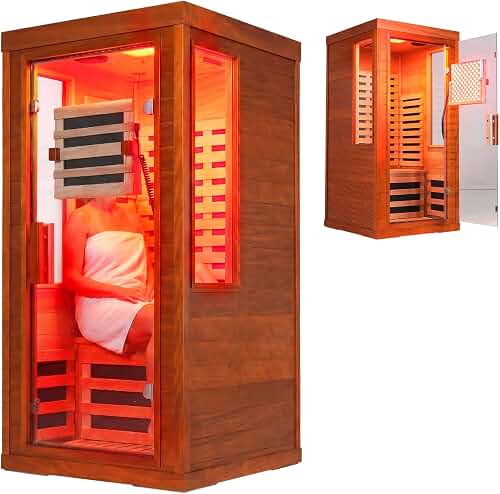
Fitting a Maxxus Seattle for home gym integration with power rack setup is mostly a spatial and electrical exercise: the Seattle is a 3-person Canadian hemlock cabin roughly 59" wide by 47" deep and 75" tall, and a typical 4-post power rack with safety arms occupies about 6 feet square once you account for plate storage and a 7-foot barbell loaded with bumpers. In a standard 2-car garage or finished basement, you can usually park the sauna against one short wall, leave 24" of breathing room on the door side, and still keep a 7-foot platform plus rack on the opposite wall. The trickier piece in 2026 is electrical: the Seattle pulls a 15-amp 120V dedicated circuit, and serious gym gear (rogue rower, treadmill, mini-split) wants its own runs. Plan the panel before you frame the room.
Below is a practical build-out guide covering footprint, clearances, flooring, ventilation, and the actual lift-to-sauna recovery workflow that makes a Maxxus Seattle for home gym integration with power rack worth the wall it occupies.
Why the Maxxus Seattle Pairs Well With a Power-Rack Gym
The Seattle is a sweet spot for lifters. It is wider than the 1-person tubes that get lost in a garage, deeper than the slim corner units that cramp two people, and shorter in the depth direction than the bench-style 4-person cabins that swallow a whole bay. That 47" depth is the magic number, because it leaves enough behind a 30-36" deep power rack for a 7-foot bar to clear when you rack and unrack.
Three other reasons it integrates well with serious training equipment:
- Standard 120V plug. No 240V circuit, no electrician visit if you already have a free 15-amp dedicated outlet. That keeps the gym budget on the rack and plates.
- Bench-style seating. Two lifters can sit upright after squats without crowding; a third can lie down on the L-bench for hip flexor or hamstring stretching.
- Carbon panels on six sides. Front, back, side, calf, and floor heaters reach training temperature (around 140 deg F) in 15-20 minutes, which matches the time you would otherwise spend cooling down and rolling out.
If you have not narrowed down between cabin sizes yet, the Maxxus Seattle vs Aspen comparison walks through capacity and footprint trade-offs in detail, and the Aspen review covers the smaller 2-person cousin if your garage is tight.
The 24-inch back clearance on the rack is the rule most home gyms violate, then regret the first time they try to load and pull from inside the rack with the bar sliding back toward drywall.
Electrical Planning: Don't Trip the Garage Circuit
The Seattle ships with a standard NEMA 5-15 plug and pulls about 1750 watts at full output. On a 15-amp 120V circuit that is roughly 80% of capacity, which means it needs to be the only meaningful load on that line. The mistake people make is sharing the garage circuit between the sauna, a treadmill, the garage door opener, and a shop vacuum. First time the treadmill ramps up while the sauna is preheating, the breaker pops mid-set.
Plan for at least three dedicated 20-amp circuits in a combined sauna and lifting room:
- Sauna circuit. 15-amp 120V dedicated, GFCI-protected if local code requires it for garages.
- Cardio circuit. 20-amp 120V for treadmill, rower, fan.
- Lighting and accessories. 20-amp for overhead lights, speakers, a charging hub, and any mini-split or window AC.
A mini-split is the unsung hero of a Maxxus Seattle for home gym integration with power rack room. The sauna will dump heat into the space when the door opens for cooldown, and lifting raises ambient temperature on its own. A 9,000-12,000 BTU mini-split keeps the gym at 65-68 deg F so you can actually train, and most are 240V on their own circuit.
For a deeper walk-through of installation prerequisites, the home infrared sauna installation guide covers leveling, outlet positioning, and assembly time in detail.
Flooring: One Floor or Two Zones?
The cleanest builds use two flooring zones. Under the sauna and 24 inches around it, use sealed LVP, tile, or a moisture-rated rubber mat; the sauna will not leak, but you will track sweat out the door. Under the power rack and platform, use 3/4-inch horse stall mats or interlocking gym tiles to absorb dropped barbells. Trying to deadlift directly on the sauna's adjacent finish flooring will scar it within a week.
If you are pouring or refinishing a concrete slab, ask for a 4,000 PSI mix with a hard trowel finish; that gives you the durability for plates and the smooth surface that lets the sauna sit flat without shimming. Hemlock cabins are sensitive to twisting on uneven floors and the glass door will rub if a corner is high.
Ventilation, Humidity, and Garage Concerns
Far-infrared saunas produce dry heat, not steam, so humidity is less of a concern than with a traditional Finnish sauna. That said, three things matter for a combined gym room:
- Off-gassing during the first ten uses. New hemlock and adhesives release a mild odor for the first few sessions. Run the sauna empty at 140 deg F for two hours twice before your first real session, with the gym door cracked open.
- Garage carbon monoxide. Never run the sauna with a car idling in the same enclosed space. Obvious, but worth saying.
- Insulation. An uninsulated garage will steal heat from the sauna's preheat cycle and add 5-10 minutes to your warmup. Insulating the garage door alone makes a noticeable difference.
Recovery Workflow: Lift, Cool, Sauna
The whole reason to put a Maxxus Seattle for home gym integration with power rack project together is the recovery loop. The sequence that works best for most lifters:
- Train your main session (45-75 minutes).
- Cool down for 10-15 minutes with mobility, walking, or stretching. Skipping this and going straight from heavy squats into 140 deg F heat raises heart rate uncomfortably.
- Hydrate with 16-24 oz of water plus electrolytes before entering.
- Sauna for 25-40 minutes at 130-145 deg F.
- Cold rinse or plunge if you have one; cold water on the wrists and neck works fine if you do not.
Preheat the sauna before your last set so the cabin is at temperature when you finish. The Seattle is quick to warm up but not instant. For dosing frequency, the how often to use an infrared sauna guide covers session frequency for lifters and endurance athletes specifically.
What the Seattle Does Not Do
Honest limits matter. The Seattle is far-infrared only, not full-spectrum, so if you are chasing near-infrared red-light therapy in the same cabin you will need add-on panels or a different unit. The chromotherapy and Bluetooth speakers are nice but not audiophile. And the bench surfaces are flat hemlock, not contoured ergonomic seating, so a folded towel makes longer sessions much more comfortable.
If full-spectrum or near-infrared therapy is non-negotiable, browse the best full-spectrum infrared saunas roundup before locking in the Seattle.
Budget Check: What the Full Build Costs in 2026
A rough all-in for a Maxxus Seattle plus a serviceable power rack gym, assuming you already have the room and a usable circuit:
- Maxxus Seattle 3-person sauna: $2,800-3,400
- Power rack with safety arms and pull-up bar: $600-1,200
- 7-foot Olympic barbell plus 300 lb of plates: $500-900
- Adjustable bench: $200-450
- Horse stall mats (six 4x6 mats): $300-450
- Electrical sub-panel work (if needed): $500-1,500
- Mini-split for climate control: $1,200-2,200 installed
You can land a complete setup between $6,000 and $9,500 depending on flooring choices and whether the panel needs an upgrade. If that number is higher than expected, the infrared sauna cost and budget guide breaks down where to compromise without giving up the things that matter.
Frequently Asked Questions
Can the Maxxus Seattle run on the same circuit as my power rack lighting?
Technically yes, but practically no. The sauna draws roughly 1750 watts continuously while heating. Add LED overhead lights and you are usually fine, but the moment you plug a treadmill, fan heater, or shop vacuum into the same circuit you will trip the breaker. Run the sauna on a dedicated 15-amp 120V outlet and leave the gym lighting and accessories on a separate 20-amp circuit.
How much clearance does the sauna need behind a power rack with deadlift platform?
Keep at least 24 inches between the back of the rack and the nearest wall or sauna face. A standard 7-foot Olympic barbell is 86.5 inches long with collars; you need room for plate rotation and for the bar to settle on safety pins without contacting drywall or hemlock paneling. If you pull conventional deadlifts inside the rack, push that clearance to 30 inches.
Will sauna heat damage my barbell or weight plates?
No, because the heat is contained inside the sauna cabin. When the door is closed, almost no usable heat escapes. The bigger concern is humidity from sweat, dropped towels, and the general moisture lifters bring into a basement. Keep a dehumidifier running below 60% RH and your bar's chrome or zinc finish will be fine for years.
Is the Maxxus Seattle quiet enough to use while someone else is lifting?
Yes. The Seattle has no blower; carbon panels heat by radiation and the only audible sound is the optional Bluetooth speaker. A person inside the sauna will not hear set chatter clearly, and a lifter outside will not be disturbed by sauna operation. The clank of plates is louder than anything the cabin produces.
Can I install the sauna in an unheated garage?
You can, but preheat times stretch from 15 minutes to 30-40 minutes in winter, and the cabin will lose heat faster during a session if the surrounding air is below 50 deg F. Insulating the garage walls and door brings preheat back to spec. In climates that drop below freezing for months, plan to insulate the gym room as part of the build.
What is the best floor plan for a 2-car garage with a sauna and full rack?
Park the Seattle in a back corner with the door facing into the room. Put the power rack on the opposite long wall with a 8-foot deadlift platform. Reserve the third zone for a bench, dumbbells, and a fan. This layout keeps the sauna's hot side away from the entrance, leaves the bar's plate-loading area unobstructed, and gives you a clear walking lane between gear.
Does sauna use after lifting hurt muscle growth?
The current evidence does not support hypertrophy losses from post-lift heat exposure at the temperatures the Seattle reaches. Studies on heat acclimation actually show favorable effects on plasma volume, growth hormone response, and perceived recovery. Stay hydrated, keep sessions to 25-40 minutes, and skip the sauna entirely on days you feel acutely fatigued or lightheaded.
Where can I learn more about evaluating infrared saunas before buying?
The infrared sauna buying guide walks through wood type, EMF readings, heater technology, and warranty terms across the major brands, which is the right next step if you are still cross-shopping the Seattle against other 3-person cabins.
Key Takeaways
- Choosing the right Maxxus Seattle for home gym integration with power rack means matching the key features to your specific needs and budget
- Read real customer reviews and check the return policy before you commit
- Also covers: Maxxus Seattle garage gym install
- Also covers: Seattle sauna next to squat rack
- Also covers: Maxxus Seattle 220V gym wiring
- Compare value across models — the priciest option is not always the best fit